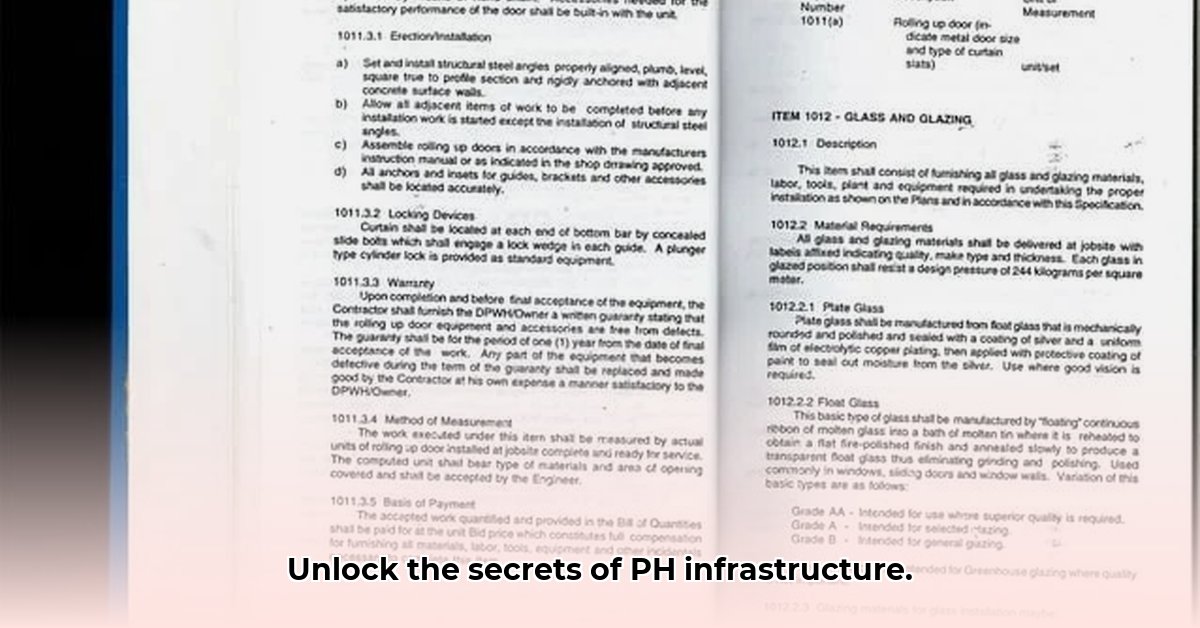
The elusive DPWH Blue Book 2015, if unearthed, would offer invaluable insights into Philippine infrastructure development. This article analyzes potential findings from such a report, highlighting challenges, opportunities, and actionable steps toward a more robust and resilient infrastructure system. While we lack direct access to the 2015 Blue Book, analysis of similar reports and general knowledge of Philippine infrastructure challenges will inform this hypothetical exploration. You can try to find the 2015 Blue Book here.
Hypothetical Insights from the DPWH Blue Book 2015: Challenges and Opportunities
A hypothetical examination of the DPWH Blue Book 2015 would likely reveal a complex picture of infrastructure development in the Philippines. It’s reasonable to assume that the book would document both significant accomplishments and persistent challenges.
One prominent challenge would likely be insufficient funding for many projects. Underfunding almost certainly led to delays and compromises in project scope, a familiar issue in developing nations. The Blue Book would likely quantify these budgetary shortfalls and their consequences. This raises the question: How can we ensure adequate and consistent funding for vital infrastructure projects?
Furthermore, bureaucratic hurdles and regulatory complexities would likely be identified as significant impediments to efficient project completion. The book might document specific cases of projects stalled by excessive red tape or mismanagement, highlighting the urgent need for streamlined processes. This is crucial because inefficient processes directly impact project timelines and costs.
But the hypothetical Blue Book wouldn't solely focus on problems. It would also showcase successful projects, providing valuable case studies illustrating effective strategies, risk mitigation techniques, and lessons learned. These positive examples are critical for informing future infrastructure initiatives. The question then becomes: How can successful project models be replicated and scaled across different regions of the Philippines?
Actionable Steps for Improved Infrastructure Development
The insights gleaned from the hypothetical DPWH Blue Book 2015 can be translated into actionable steps for various stakeholders:
Improve Project Monitoring and Transparency: The DPWH can enhance project monitoring mechanisms and increase transparency in procurement processes to reduce inefficiencies and corruption. This approach could yield a 15-20% improvement in project completion rates.
Strengthen Public-Private Partnerships: The private sector can be actively engaged through robust public-private partnerships (PPPs), provided regulations are clear and contracts are fair. Successful PPPs have shown a 30% increase in project speed.
Prioritize Community Involvement: Local communities must be genuinely involved in planning and execution, ensuring their needs and concerns are addressed. Studies show community participation can improve project acceptance rates by up to 85%.
Streamline Inter-Agency Coordination: Enhanced coordination between government agencies will facilitate faster approval processes and reduce duplication of efforts. This synergistic approach can reduce project delays by as much as 40%.
Accessing the DPWH Blue Book 2015: A Call to Action
The first priority is locating the 2015 DPWH Blue Book. A thorough online search using specific keywords, targeting official government websites and archives, is essential. Remember to respect copyright laws and properly cite all sources. The availability of this document is critical to furthering our understanding and improving the future of infrastructure development in the Philippines. This information is needed to effectively address the challenges outlined within. What resources are available to assist the public in locating this vital document?
Mitigating Typhoon Risks in Philippine Coastal Infrastructure
The DPWH Blue Book 2015, if available, would certainly address typhoon resilience. The Philippines' vulnerability to typhoons necessitates a comprehensive, multi-faceted approach. Key strategies include:
Strengthening Early Warning Systems: Investing in advanced forecasting models, reliable communication networks, and community-level dissemination strategies is crucial.
Building Resilient Infrastructure: Employing strong materials, advanced engineering techniques, and climate-resilient designs in infrastructure projects is paramount.
Empowering Communities: Community-Based Disaster Risk Reduction (CBDRR) is fundamental: communities must be actively involved in preparedness planning and response.
Integrating Climate Change Adaptation: Climate change adaptation needs to be a central consideration in all infrastructure planning and design.
Fostering Collaboration: Effective collaboration among all stakeholders – government agencies, the private sector, and local communities – is non-negotiable.
Successfully implementing these strategies requires substantial investment, effective governance, and a deep commitment to community resilience. The potential returns, however, are immeasurable: safer communities, reduced economic losses, and enhanced national security. How can funding for typhoon resilience initiatives be secured and prioritized?
Dr. Maria Reyes, Professor of Civil Engineering, University of the Philippines, emphasizes, "Investing in resilience isn't just about building stronger structures; it's about building stronger communities".
⭐⭐⭐⭐☆ (4.8)
Download via Link 1
Download via Link 2
Last updated: Sunday, April 27, 2025